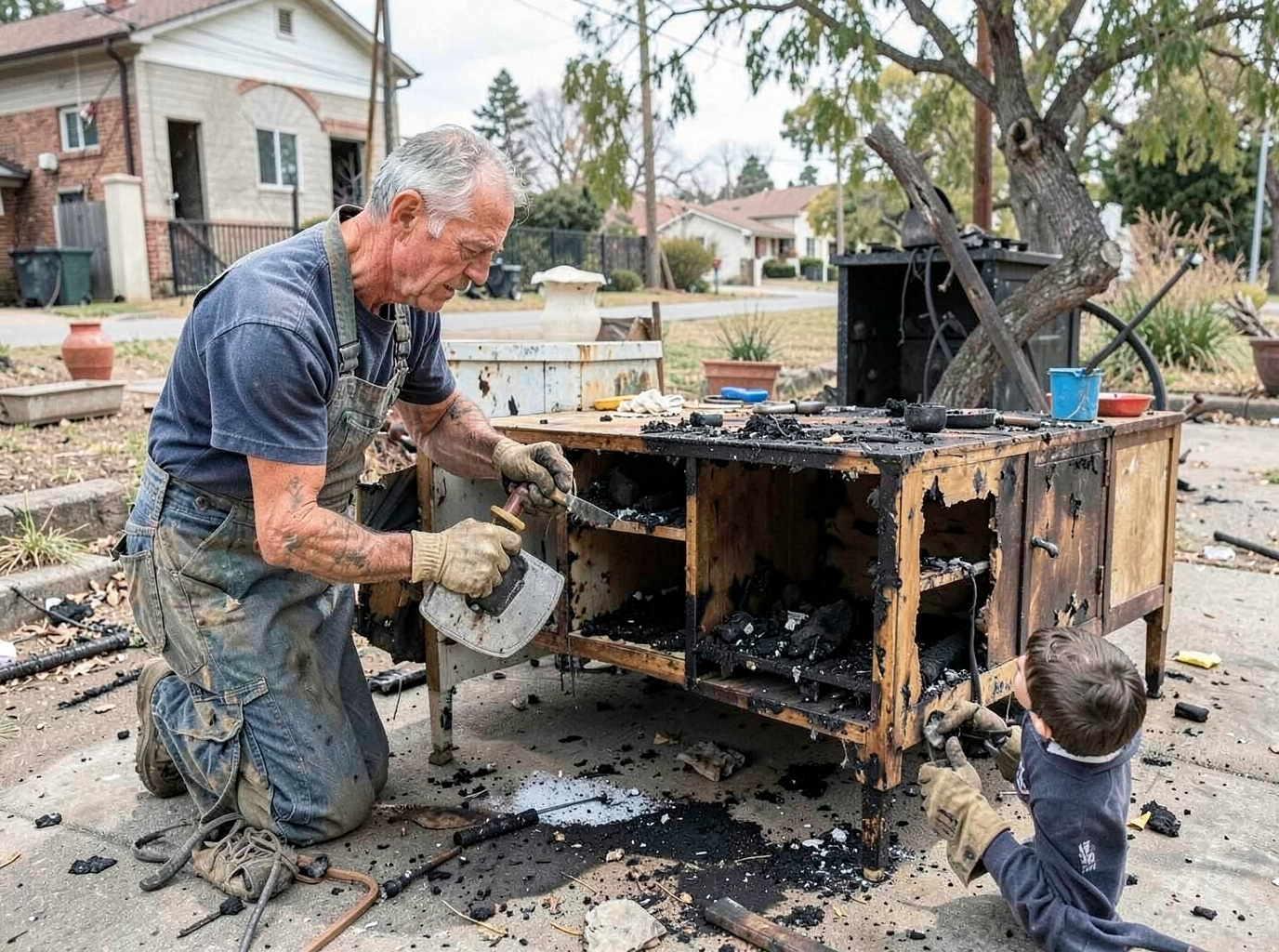
Woodland Hills homes built from the 1950s onward often hold mid-century pieces with solid oak frames, walnut veneers and horsehair or cotton batting that trap acidic soot deep in joints and crevices. Dry Mediterranean summers keep relative humidity low, so soot stays powdery and travels further into fabric weaves and leather pores before any moisture from suppression water sets it. Technicians at 6443 Canoga Ave begin every job by testing pH on each material because alkaline smoke residue from common structure fires can etch finishes if left untreated for even a few days.
Westfield Topanga and Warner Center Park sit in the same wind corridor that funnels Santa Ana gusts through the valley; those winds carry fine ash from nearby brush or structure fires into open windows and garage doors common on ranch-style homes in West Hills. Once ash lands on upholstery it bonds with skin oils and becomes far harder to lift without lifting color from the textile. Restoration crews therefore isolate pieces in negative-air chambers before any vacuuming or solvent work begins.
Pierce College area properties frequently feature older recliners and dining sets with glued joints that weaken when water from suppression mixes with smoke acids. Technicians check for delamination by probing under UV light and then apply targeted consolidants rather than full disassembly when the frame remains sound. This approach keeps original hardware and avoids the shrinkage that can occur when kiln-dried woods are exposed to the rapid humidity swings typical after Los Angeles County fire events.
Smoke Odor Re-ignition Risks
Low winter moisture in Calabasas and Chatsworth canyons lets residual smoke oils re-volatilize when indoor heat kicks on, creating a recurring odor that standard ozone treatments miss on porous woods. Crews therefore seal treated surfaces with low-VOC lacquers matched to the original finish before returning pieces to the home.
Technician insight
In Woodland Hills the thing that catches most people out with fire-damaged furniture restoration is how the dry summer air lets soot stay airborne and work its way into the open-grain oak and walnut common in 1960s ranch homes near Warner Center. Homeowners try wiping surfaces too soon and drive the residue deeper into the pores before we can neutralize the acids.
Warner Center Dining Set After Kitchen Fire
Smoke from a stove fire traveled through an open floor plan and coated a 1970s walnut table and chairs in West Hills. We found acidic soot lodged in the unsealed grain and water rings on two chair seats from suppression efforts. After isolation cleaning, pH neutralization and targeted refinishing the set returned without odor or visible damage.
How it works
- 1
On-Site Assessment
Inspect each piece for char depth, smoke penetration and water damage while documenting construction details typical of Woodland Hills furniture.
- 2
Isolation And Pre-Cleaning
Move items to controlled environment at the Canoga Ave location and remove loose soot with HEPA vacuuming before any liquid contact.
- 3
Material-Specific Cleaning
Apply pH-balanced solutions matched to wood, leather or fabric substrates, followed by rinsing and drying under dehumidified airflow.
- 4
Repair And Refinishing
Consolidate joints, replace damaged veneer sections and apply protective coatings that resist future smoke adhesion.
- 5
Final Odor Neutralization
Seal and test in a chamber before return to confirm no re-ignition of odors common in dry Los Angeles County winters.
Pricing
Cost depends on number of pieces, material types and extent of smoke versus char damage; upfront quotes provided after inspection.