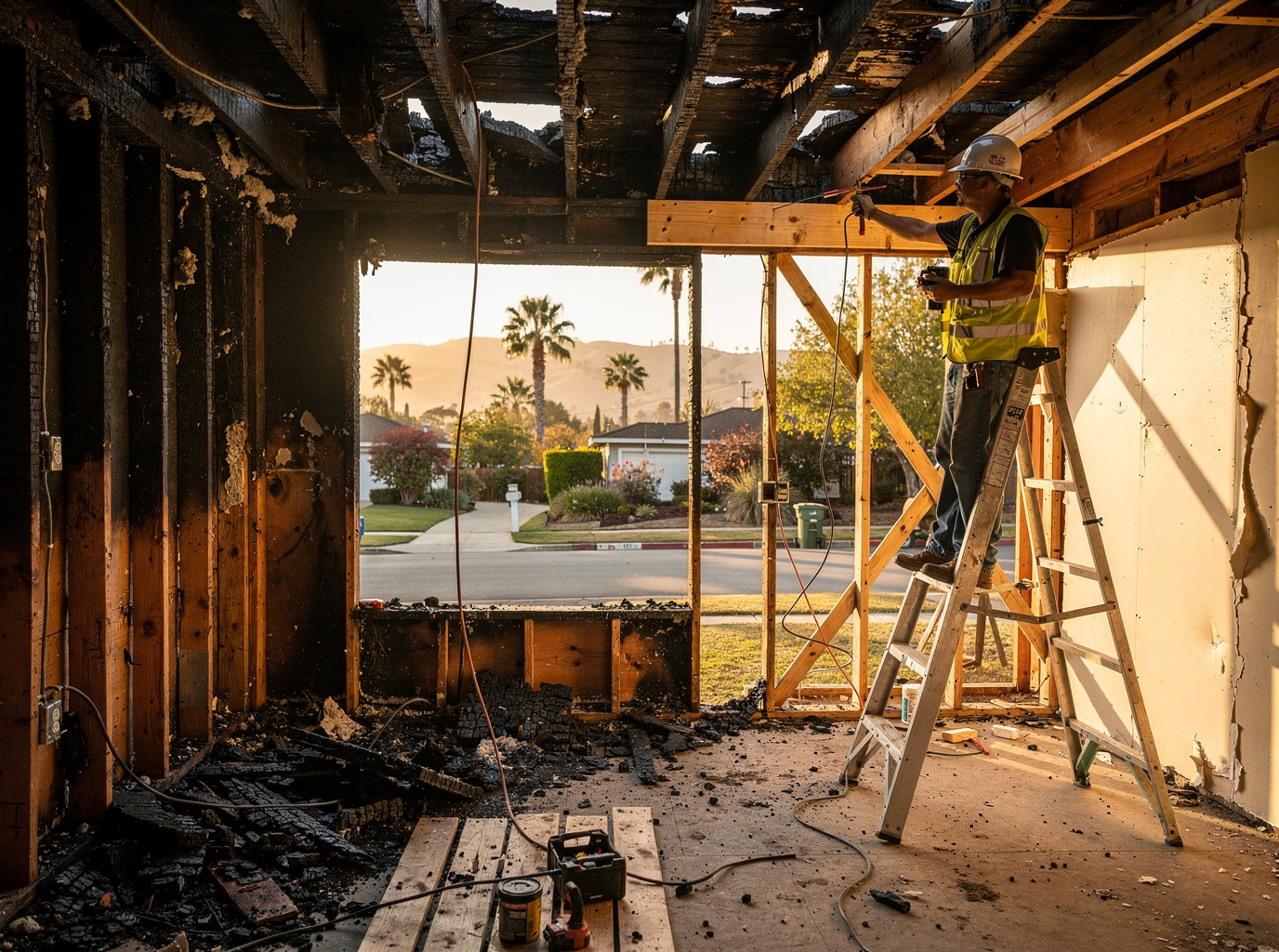
Fires in Woodland Hills often start in dry summer conditions typical of the Mediterranean climate and spread quickly through older wood-frame homes built in the 1960s and 1970s near Canoga Park and Chatsworth. Structural repair begins with a full engineering assessment of load-bearing walls, roof trusses, and foundations that may have hidden charring or weakened connections. Crews must also account for Los Angeles County building codes that require upgrades to current seismic standards during any major rebuild after fire damage.
Smoke and soot travel through HVAC systems and wall cavities in stucco homes common around Warner Center Park and Westfield Topanga, so repair work frequently includes removal of contaminated insulation and drywall far beyond the visible burn area. Technicians check for water intrusion from firefighting efforts that can lead to mold in the mild winter months, especially on slopes where drainage is poor. All replacement lumber and sheathing must match the existing construction to maintain structural integrity without triggering full seismic retrofits unless the scope exceeds certain thresholds.
Edge cases arise when fire reaches attached garages or shared walls in townhomes near Pierce College, requiring coordination with neighbors and HOA rules. Temporary shoring is installed immediately to prevent collapse during debris removal, and final repairs include fire-rated materials where code demands them. Homeowners should expect the process to include multiple inspections by city officials before walls are closed up.
Technician insight
In Woodland Hills, the thing that catches most people out with Structural repair after fire is how the dry summers let smoke travel deep into the cavities of 1970s stucco homes on the hillsides near Warner Center. Homeowners often think only the burned room needs work, but once we open the walls we find soot in every stud bay and compromised shear panels that must be replaced to meet current Los Angeles County seismic rules.
Hidden Damage in West Hills Home
A kitchen fire in a 1972 wood-frame house near West Hills spread smoke through the attic. We found charred roof trusses and water from suppression soaking insulation down to the foundation. After shoring the roof and replacing damaged framing with fire-rated lumber, the structure passed inspection and the family moved back in without further issues.
How it works
- 1
Initial Assessment
Technicians inspect structural elements, document damage, and identify hidden issues in framing and foundations.
- 2
Safety Shoring
Install temporary supports to stabilize the building before debris removal begins.
- 3
Debris and Contaminant Removal
Remove charred materials and smoke-affected components while protecting unaffected areas.
- 4
Structural Reconstruction
Replace damaged beams, walls, and roof sections using code-compliant materials and methods.
- 5
Final Inspection and Finish
Complete code inspections and restore surfaces to match original construction.
Pricing
Upfront quotes provided after on-site inspection; final cost depends on extent of hidden damage and code upgrade requirements.