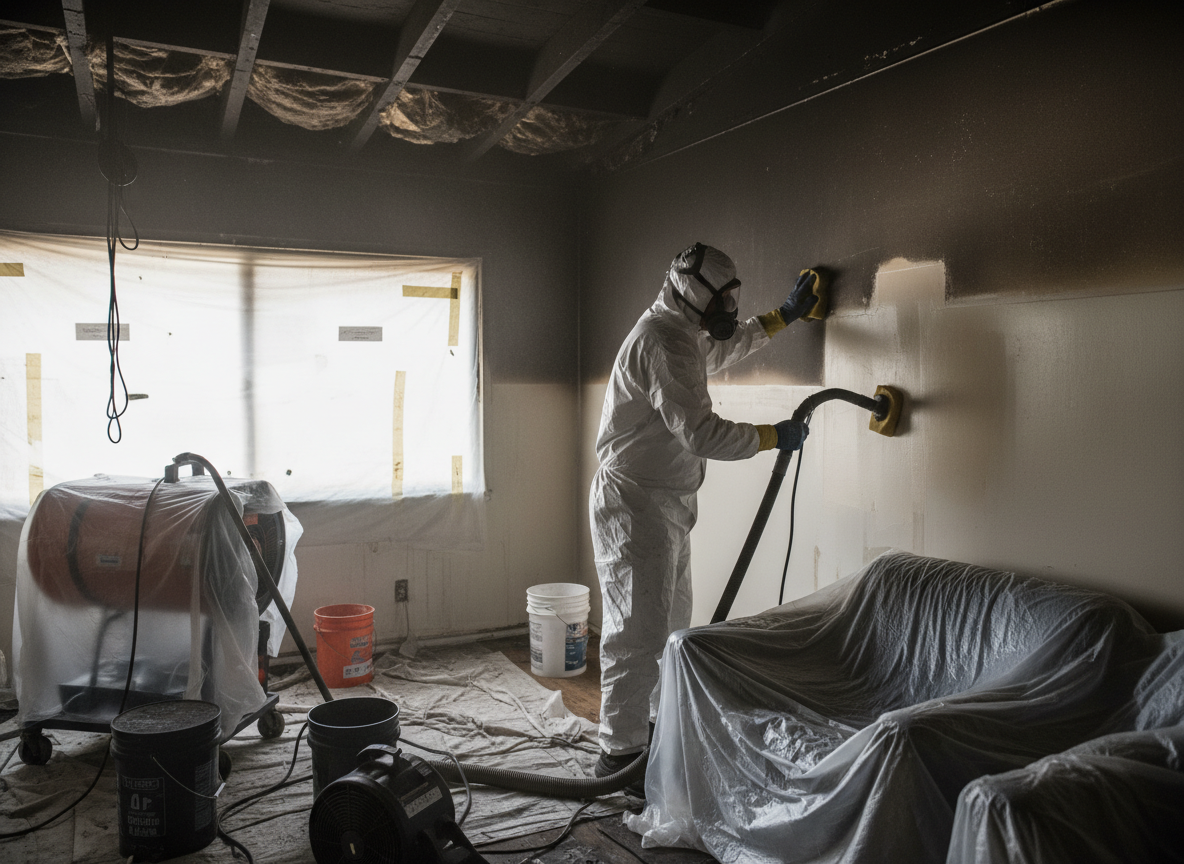
Smoke from structure fires travels through the HVAC systems common in Woodland Hills ranch homes built in the 1960s and 1970s. The area's Mediterranean climate with warm dry summers allows fine soot particles to embed deeply into drywall, insulation, and attic spaces before homeowners notice odors. Technicians must test for pH levels on surfaces because alkaline smoke residue from synthetic materials can continue corroding metal fixtures and electronics long after the fire is out.
In neighborhoods like Warner Center and West Hills, stucco exteriors and flat roofs create unique pathways for smoke to migrate into wall cavities during Santa Ana wind events. Standard cleaning fails when smoke has bonded to textured ceilings or permeated the blown-in cellulose insulation typical of homes near Westfield Topanga. Full removal often requires removing and replacing affected sections rather than surface wiping alone.
Properties near Pierce College and Canoga Park frequently feature older electrical systems that trap smoke inside conduit runs. Restoration crews use air scrubbers with HEPA filtration and hydroxyl generators to neutralize odors without introducing additional moisture that could trigger mold in the mild winter months. Homeowners should avoid running central air until ducts are professionally cleaned to prevent re-circulation of particulates.
Technician insight
In Woodland Hills, the thing that catches most people out with Smoke damage restoration is how the dry summers let soot settle into the unsealed stucco wall cavities of 1960s homes near Warner Center Park, so simply cleaning visible surfaces leaves odors that return the first time the heat kicks on.
West Hills Kitchen Fire Smoke Migration
Smoke from a cooking fire traveled through ceiling joists into the attic of a 1972 home near Pierce College. Inspection revealed heavy residue inside the HVAC trunk line and on fiberglass batts. Crews removed the contaminated insulation, cleaned the ductwork, and treated remaining surfaces before reinstalling new insulation to restore indoor air quality.
How it works
- 1
Initial Assessment
Technicians arrive within hours to document smoke migration patterns through the home's specific layout and test surfaces for residue depth.
- 2
Containment and Ventilation
Negative air machines isolate affected zones while preventing cross-contamination into unaffected rooms common in open-plan Woodland Hills layouts.
- 3
Source Removal
Porous materials like carpet padding, insulation, and drywall sections showing embedded soot are removed rather than cleaned when restoration is not viable.
- 4
Cleaning and Deodorization
Specialized equipment targets alkaline and acidic smoke residues on remaining surfaces followed by thermal fogging to reach hidden cavities.
- 5
Final Clearance Testing
Air quality and surface pH checks confirm the home meets habitability standards before contents are returned.
Pricing
Costs depend on square footage affected, depth of smoke penetration into insulation and ducts, and whether contents require separate treatment.