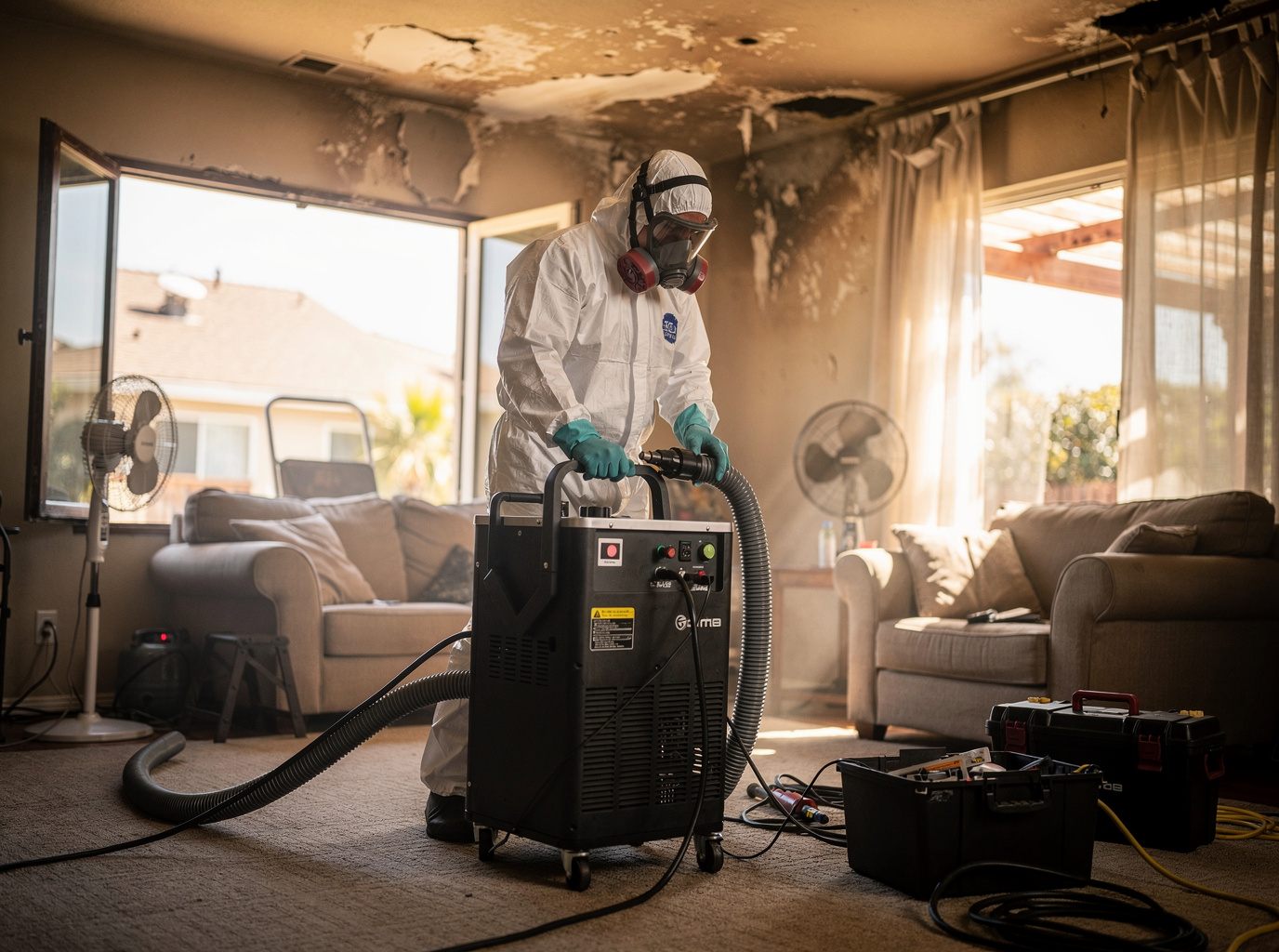
Woodland Hills sits in a Mediterranean climate with warm dry summers that let smoke particulates settle deep into porous materials like drywall, insulation, and hardwood floors common in 1950s-1970s ranch homes near Pierce College. After a fire, these residues release odors for months when humidity rises even slightly during mild winters. Technicians must map airflow paths through attics and wall cavities because the flat terrain and proximity to Warner Center high-rises create unique pressure differentials that push odors into neighboring units.
In Los Angeles County, older stucco construction in West Hills and Canoga Park often hides smoke behind layers of textured plaster that standard cleaning misses. Odor removal requires thermal fogging or hydroxyl generators calibrated for the dry air, followed by repeated air scrubbing to prevent re-soiling when Santa Ana winds return. Homeowners near Westfield Topanga frequently discover odors have traveled through shared HVAC ducts into adjacent townhomes, requiring coordinated treatment across multiple addresses.
Edge cases include properties backing onto the hills where soil composition retains moisture longer, allowing odors to bind with dust in crawl spaces. Technicians test for hidden char in subflooring before sealing, because residual smells reappear once temperatures climb above 80 degrees in summer. All work follows Los Angeles County air-quality guidelines to avoid pushing particulates into nearby Chatsworth neighborhoods during treatment.
Technician insight
In Woodland Hills, the thing that catches most people out with Odor removal after fire is how smoke travels through the open crawl spaces under 1960s ranch homes near Westfield Topanga when the dry summer winds hit. Homeowners often seal only visible rooms and miss the shared ductwork that carries odors into West Hills neighbors.
Lingering Smoke in Warner Center Condo
A fire in an adjacent unit left persistent odor in a Woodland Hills condo near Warner Center Park. Inspection found smoke had entered through shared HVAC lines and settled in the attic insulation. Crews performed source removal, applied hydroxyl treatment across three units, and ran air scrubbers for four days. Odors cleared without recurrence during the following warm spell.
How it works
- 1
Initial Assessment
Inspect every room, attic, and crawl space in the Woodland Hills property to locate odor sources and map smoke migration paths.
- 2
Source Removal
Remove charred materials and vacuum loose soot from surfaces using HEPA equipment suited to local stucco and hardwood construction.
- 3
Odor Neutralization
Apply thermal fogging or hydroxyl treatment throughout the structure, focusing on HVAC systems common in Warner Center homes.
- 4
Air Purification and Verification
Run air scrubbers for several days then test air quality to confirm odors are eliminated before final clearance.
Pricing
Pricing varies by home size, extent of smoke penetration into walls and ducts, and number of treatment cycles required.