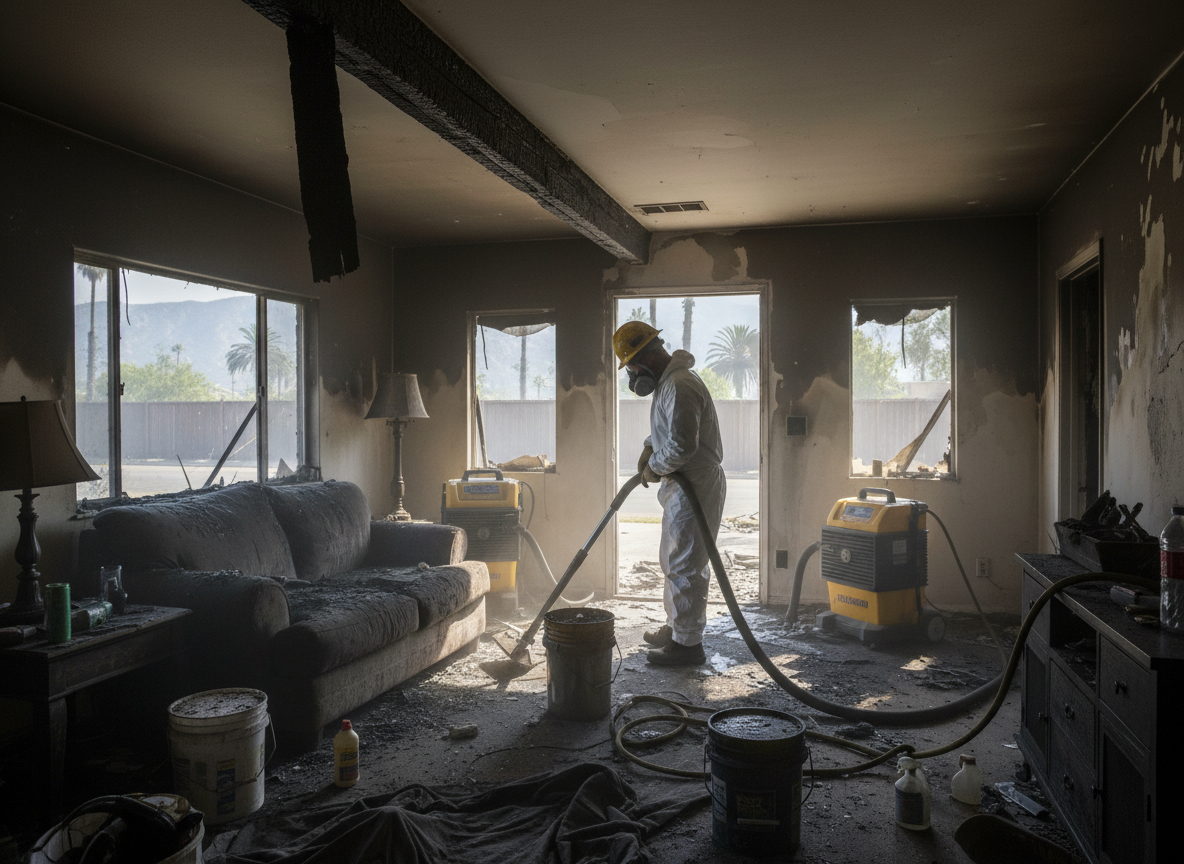
Woodland Hills homes built from the 1950s through the 1980s often feature wood-frame construction with older electrical systems that can complicate smoke migration through walls and attics. After a fire, crews must address both visible char and the fine soot that settles into HVAC ducts and behind baseboards, especially during the dry summer months when low humidity lets particles travel farther. Mediterranean climate patterns mean sudden Santa Ana winds can push smoke into neighboring properties in Warner Center or West Hills, requiring containment before it affects Pierce College campus buildings or nearby commercial corridors.
Los Angeles County building codes require permits for any structural repairs following fire damage, and older stucco exteriors common in Canoga Park and Chatsworth can hide hidden charring that only shows up after moisture testing. Emergency crews work around the clock from the Canoga Ave location to board up openings and prevent rain intrusion during the mild winter season, when even light showers can turn soot into acidic residue on concrete slabs. Westfield Topanga mall and surrounding retail areas add foot traffic considerations when fires occur near commercial zones.
Soil conditions in the area include compacted fill from earlier development, which affects how water used during suppression drains away and can lead to secondary mold issues under slabs if not addressed quickly. Crews document every step for insurance adjusters while coordinating with local utility shutoffs that are sometimes delayed in hillside sections of Woodland Hills.
Technician insight
In Woodland Hills the thing that catches most people out with Emergency fire damage restoration is how quickly soot travels through the older ductwork in 1960s and 70s homes near Warner Center Park, especially when the dry summer air lets particles drift into West Hills before we can contain it.
Kitchen Fire Spread Into Attic
A cooking fire in a Woodland Hills residence sent smoke through the HVAC into the attic. We found heavy soot in the ducts and behind insulation near Westfield Topanga. Crews removed contaminated materials, cleaned the system, and prevented further migration into adjacent units before winter rains arrived.
How it works
- 1
Secure The Site
Board up openings and establish safety perimeters to prevent unauthorized entry and weather exposure.
- 2
Assess Smoke And Soot Spread
Inspect HVAC, attics, and wall cavities using moisture meters and visual checks to map contamination extent.
- 3
Remove Debris And Contaminants
Extract charred materials and HEPA vacuum soot from surfaces while protecting unaffected areas.
- 4
Clean And Deodorize
Apply specialized agents to neutralize odors and residues before final air scrubbing.
- 5
Coordinate Repairs And Documentation
Provide detailed reports for insurance and prepare surfaces for permitted reconstruction work.
Pricing
Upfront quotes provided after on-site inspection; final cost depends on square footage affected and extent of smoke penetration.