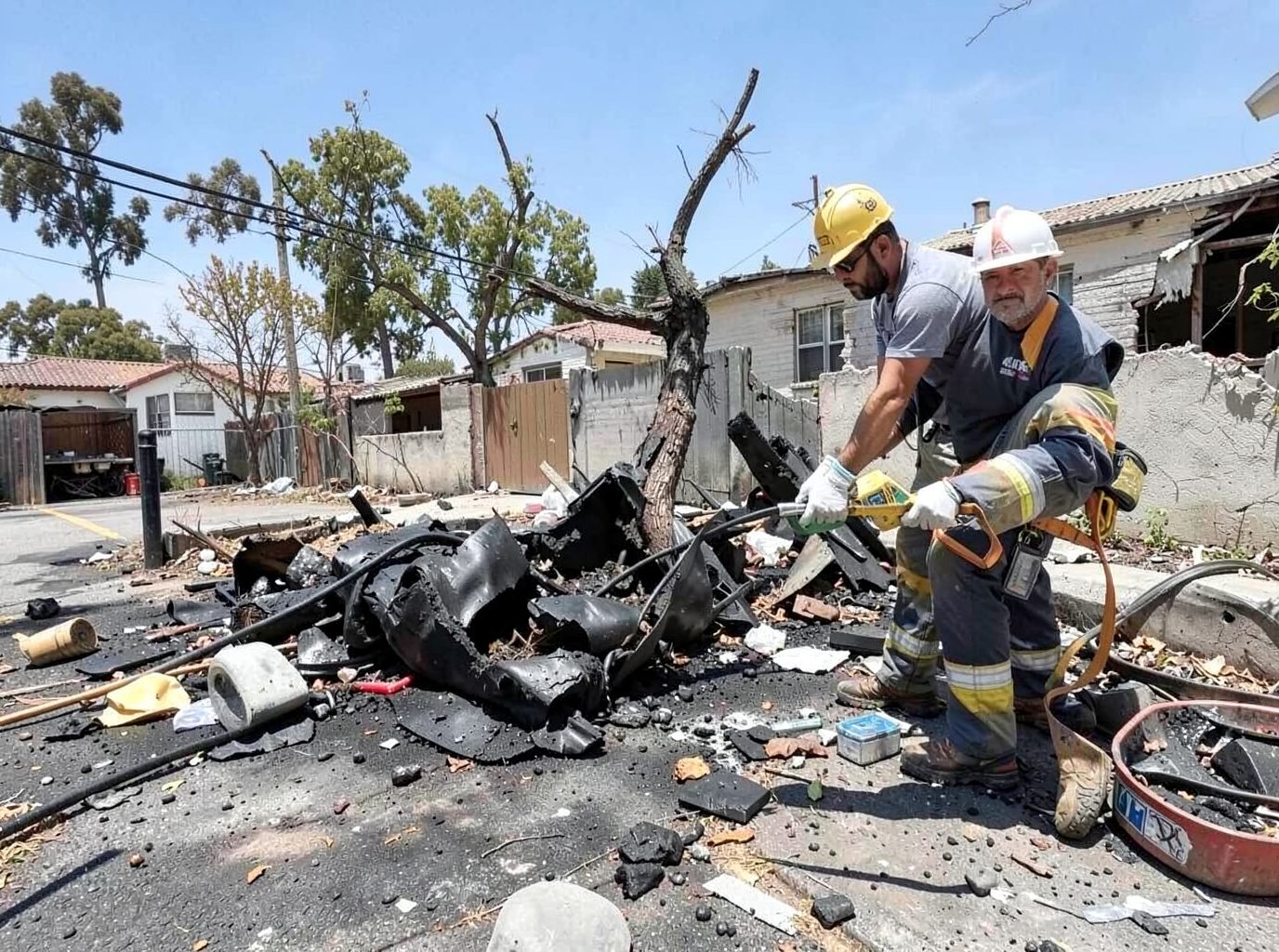
Woodland Hills homes built on hillside lots near Warner Center Park often feature wood framing and stucco exteriors that trap smoke in wall cavities after a fire. The Mediterranean climate brings warm dry summers that increase ember travel from nearby canyons into West Hills neighborhoods, requiring crews to check attic spaces and HVAC systems connected to Westfield Topanga commercial zones. Mild winters reduce natural ventilation, so residual odors linger longer in older single-story ranches common along Canoga Avenue corridors.
Pierce College area properties sit on flatter terrain but share soil conditions that hold moisture from winter rains, complicating water extraction when fire suppression lines are used. Restoration teams must separate charred insulation from intact drywall while protecting nearby Canoga Park and Chatsworth homes from cross-contamination via shared fences and driveways. Dry summer winds frequently push fine soot particles into crawl spaces under homes built before modern fire codes, demanding negative air machines staged at multiple access points.
Los Angeles County regulations require documentation of all removed materials when fire damage crosses property lines in Warner Center. Crews document hidden damage in multi-level homes near Westfield Topanga where smoke travels through shared attics, then coordinate disposal to avoid landfill restrictions on burned debris. Local crews familiar with these patterns stage equipment at the 6443 Canoga Ave base for quicker deployment than out-of-area responders.
Technician insight
In Woodland Hills the thing that catches most people out with fire damage restoration near me is how dry summer winds push soot through the gaps in older hillside homes near Warner Center Park. Homeowners often focus only on the burn room and miss fine particles that travel into West Hills attics through shared rooflines. That detail changes drying times and equipment placement every time.
Soot migration after garage fire
A fire started in a detached garage behind a home near Pierce College. Smoke traveled through the shared attic into the main living areas. We isolated the HVAC early, removed affected insulation and ran air scrubbers for four days. The family returned without lingering odors once we cleared the system connected to the main house.
How it works
- 1
Emergency Assessment
Technician arrives within hours to document visible char, smoke patterns and affected rooms in the Woodland Hills structure.
- 2
Containment and Safety
Set up barriers to prevent soot spread to unaffected areas and test for structural stability before interior work begins.
- 3
Removal of Damaged Materials
Extract burned contents and cut out compromised drywall or insulation while protecting neighboring properties in West Hills.
- 4
Cleaning and Odor Removal
Apply specialized equipment to neutralize smoke residue on surfaces and in HVAC systems serving Warner Center homes.
- 5
Final Inspection and Restoration
Verify air quality and complete repairs before returning the property to pre-loss condition.
Pricing
Upfront quotes after on-site inspection; final cost depends on square footage affected, materials involved and whether smoke reached HVAC systems.