Woodland Hills homes built in the 1960s and 1970s often feature stucco exteriors and forced-air heating that lets smoke travel through ductwork into attics and wall cavities. After a fire, acidic soot from burning plastics and wood settles on these surfaces and can corrode copper wiring or HVAC coils within days if temperatures stay warm, which they frequently do in the area's dry summers. Technicians must test for pH levels on multiple substrates before cleaning because standard detergents fail on alkaline residues common from synthetic materials in Westfield Topanga-area retail fires that spread to residences.
Los Angeles County building codes require permits for any structural repairs following fire damage, and inspectors in Chatsworth and Canoga Park routinely check for hidden charring in older roof sheathing. Smoke odor lingers in porous materials like popcorn ceilings and carpet padding long after visible soot is removed, especially when mild winter humidity allows condensation to reactivate residues. Restoration crews use air scrubbers with HEPA and activated carbon filters sized for the square footage of single-story ranch homes typical around Warner Center Park rather than relying on ozone alone, which can damage electronics still present in the space.
Pierce College students and nearby apartment complexes in Calabasas face additional challenges when fires start in shared walls or balconies because smoke migrates vertically through plumbing chases. Restoration plans must account for the shallow soil and sloped lots common in West Hills that limit equipment staging areas and require tarping to prevent ash runoff into storm drains during the first rain after an incident. Homeowners who attempt DIY cleaning with household vacuums often spread fine particles deeper into insulation, increasing the scope of professional remediation needed later.
Technician insight
In Woodland Hills, the thing that catches most people out with fire and smoke damage restoration is how quickly soot from even a small electrical fire travels through the original ductwork in 1960s ranch homes near Warner Center Park, settling in attics where dry summer air keeps particles airborne and reactive long after the fire is out.
Kitchen Fire Smoke Migration in West Hills
A kitchen appliance fire filled a single-story home with smoke that traveled through the HVAC into bedrooms and the attic. Inspection showed acidic soot on copper lines and insulation that standard cleaning would miss. Crews performed pH-balanced cleaning, sealed and cleaned the duct system, and restored air quality before any corrosion set in.
How it works
- 1
Initial Assessment and Safety Check
Technicians arrive within hours, document visible damage, test for structural integrity, and identify immediate hazards like compromised electrical systems in Woodland Hills homes.
- 2
Containment and Soot Removal
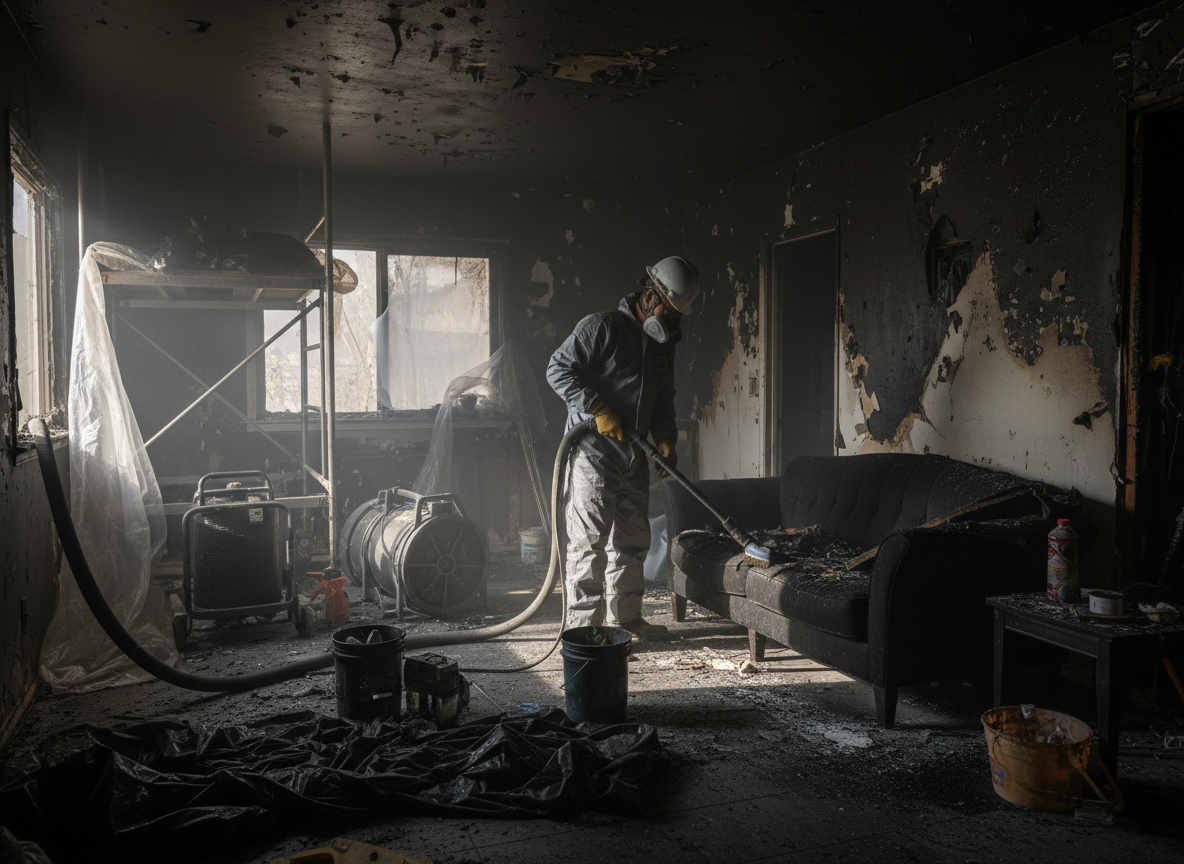
Negative air machines isolate affected zones while crews remove loose soot from surfaces using specialized vacuums and sponges suited to stucco and drywall common in the area.
- 3
Odor Neutralization and Cleaning
Thermal fogging and HEPA air scrubbing address embedded smoke odors in HVAC systems and insulation, followed by cleaning of salvageable contents and surfaces.
- 4
Restoration and Final Verification
Repairs to damaged structures occur under required permits, with final air quality testing to confirm residues are gone before reoccupancy.
Pricing
Costs depend on square footage affected, depth of smoke penetration, and whether HVAC or structural repairs are required; upfront quotes provided after inspection.