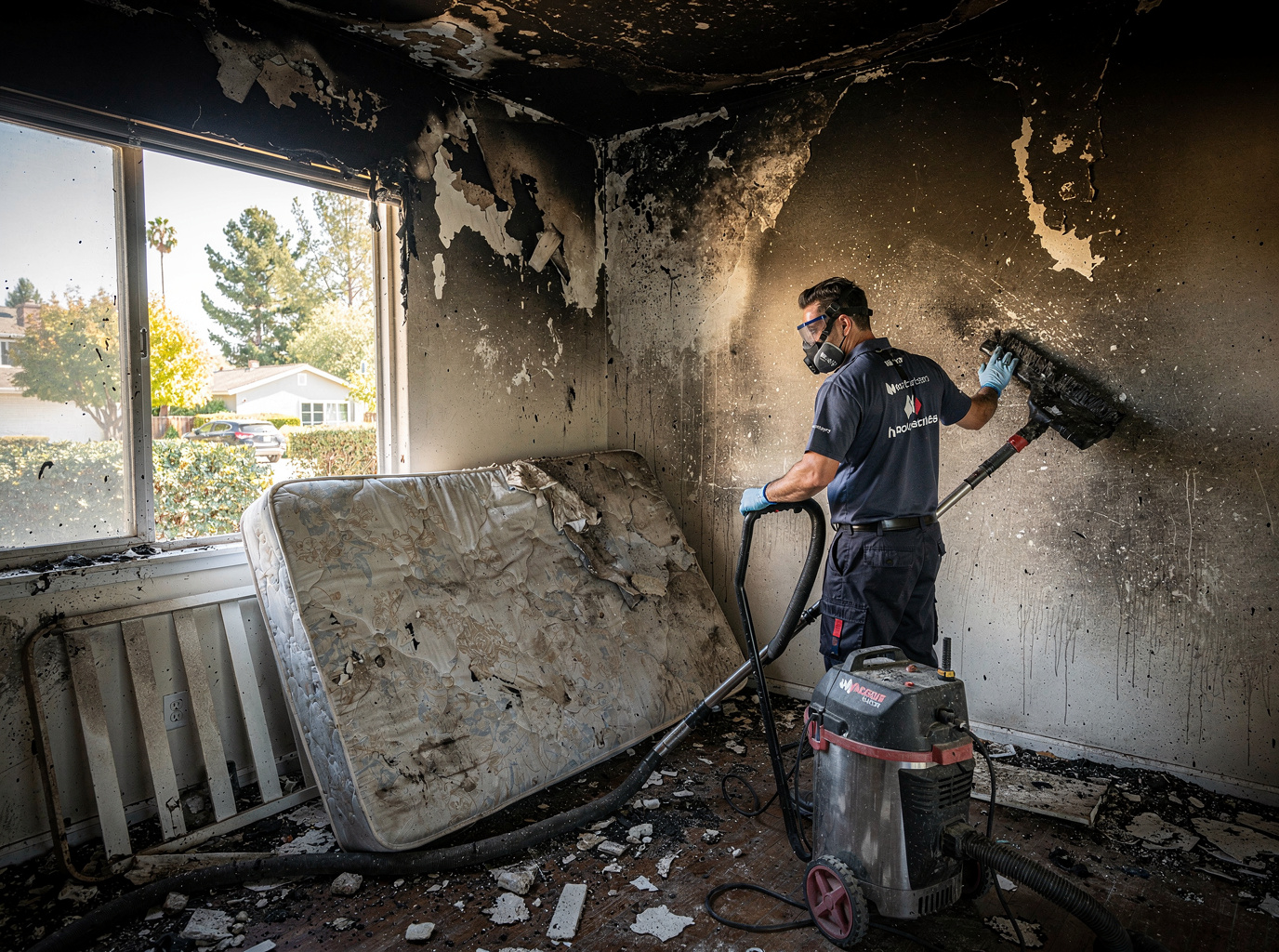
Bedroom fires in Woodland Hills often start from overloaded outlets in homes built during the 1950s and 1960s, when electrical systems were not designed for today's devices. Soot and smoke penetrate drywall, carpet padding, and mattress materials quickly in the area's dry Mediterranean climate, where low humidity allows particles to travel farther through open windows and older HVAC ducts. Cleanup requires removing affected insulation and treating porous surfaces before odors set into the wood framing common in ranch-style houses near Warner Center Park.
Technicians at our 6443 Canoga Ave location respond within hours because summer winds from the Santa Monica Mountains can carry embers and accelerate smoke spread into adjacent bedrooms. We test for hidden residue behind baseboards and in closet shelving, which is especially important in West Hills properties with single-pane windows that allow rapid temperature shifts. Neutralizing acidic soot on these surfaces prevents long-term corrosion of metal fixtures and electronics left in the room.
Local regulations in Los Angeles County require proper disposal of fire-damaged textiles and furniture, so we coordinate with approved facilities rather than standard landfills. In neighborhoods around Westfield Topanga, where homes sit close together, we also address shared wall cavities to stop smoke migration into neighboring units. This step is critical after any fire involving synthetic bedding or electronics, which produce heavier, oil-based residues that standard cleaning misses.
Technician insight
In Woodland Hills, the thing that catches most people out with Bedroom fire damage cleanup is how quickly smoke gets into the HVAC returns in these 1960s ranch homes near Canoga Ave, especially during the dry summer months when windows stay open. Homeowners often miss residue behind the closet drywall until it starts smelling again after the first rain.
Smoke in West Hills Bedroom After Electrical Fire
A bedroom fire started from a faulty lamp cord in a 1962 ranch house near Pierce College. We found heavy soot inside the return vents and under the carpet pad. After removing affected drywall sections and treating the framing, the room passed air testing and the family moved back in without lingering odors.
How it works
- 1
Initial Assessment
Inspect bedroom for visible charring, smoke patterns, and hidden damage in walls and ceilings while documenting conditions for insurance.
- 2
Containment and Ventilation
Set up barriers to isolate the room and use air scrubbers to remove airborne particles before they settle on unaffected areas.
- 3
Soot Removal
Apply specialized cleaning agents to drywall, wood, and fabrics, followed by HEPA vacuuming to lift residue from carpet and upholstery.
- 4
Odor Neutralization
Treat surfaces and air with hydroxyl generators or thermal fogging to break down smoke molecules trapped in porous materials.
- 5
Final Clearance
Conduct air quality testing and walkthrough to confirm the bedroom meets habitability standards before reassembly.
Pricing
Costs depend on square footage affected, depth of soot penetration, and whether contents require separate handling.