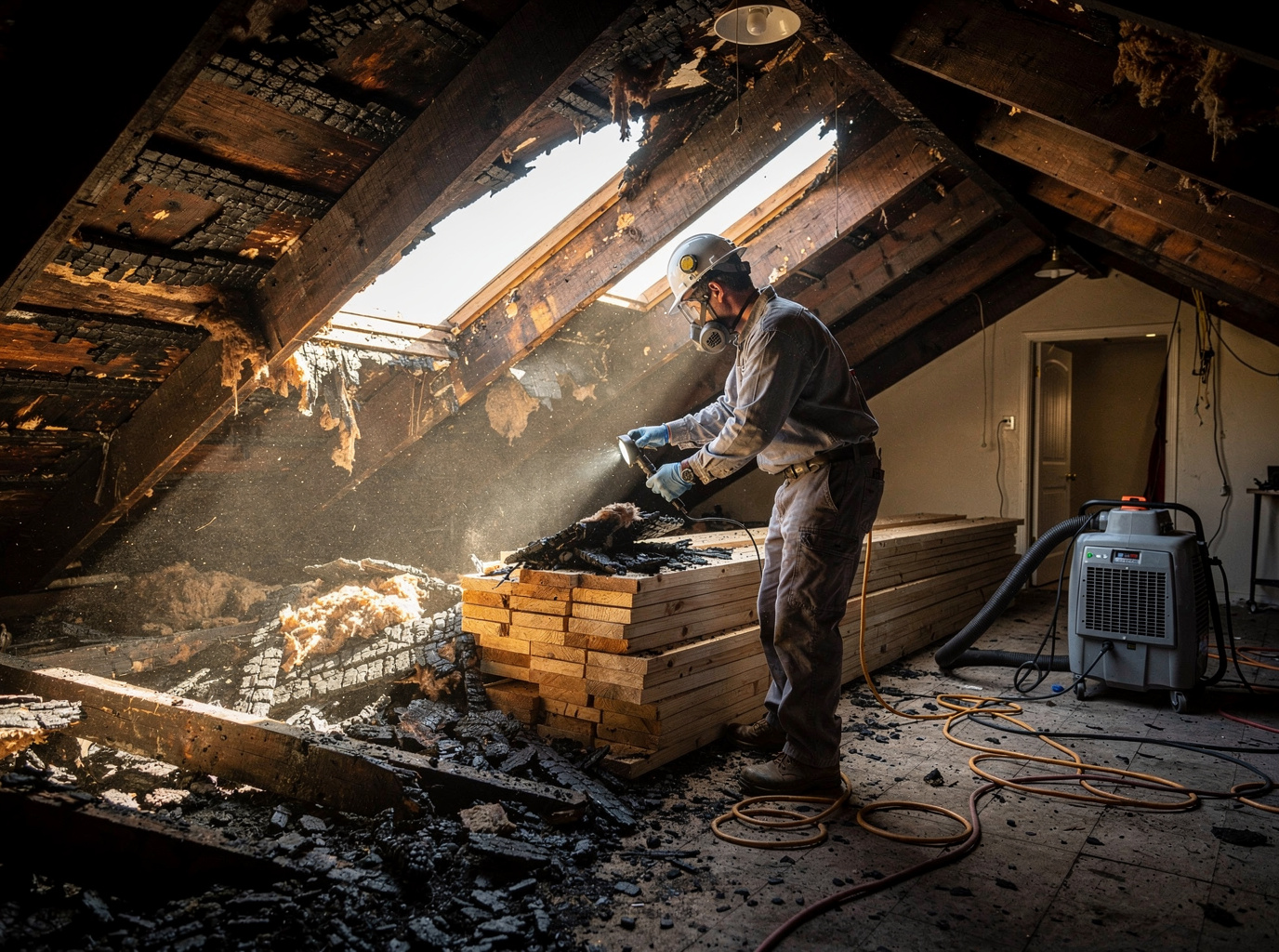
Attic fires in Woodland Hills often start from electrical faults in homes built before the 1970s around Warner Center and West Hills. These properties frequently feature older insulation and knob-and-tube wiring that allows fire to spread quickly through dry materials during the warm, arid summers typical of the Mediterranean climate. Restoration requires removing charred rafters, treating soot on exposed beams, and replacing insulation without disturbing remaining wiring that may not meet current Los Angeles County codes.
Smoke from attic fires travels downward into living spaces through small gaps common in the area's stucco and wood-frame construction near Westfield Topanga and Pierce College. Technicians must map airflow paths using thermal imaging to locate hidden residue in wall cavities and ceiling voids. Failure to address this leads to recurring odors and corrosion on metal fixtures, especially after mild winter rains increase humidity levels in the enclosed attic space.
Access challenges arise in neighborhoods like Canoga Park and Chatsworth where many homes have low-pitch roofs and limited attic entry points. Crews work around HVAC ducts and recessed lighting that trap soot, requiring targeted cleaning methods that avoid damaging original plaster ceilings. Full containment and negative air pressure prevent cross-contamination to adjacent rooms during the multi-day process.
Technician insight
In Woodland Hills, the thing that catches most people out with attic fire restoration is how dry summer winds push smoke deep into the loose-fill insulation common in 1950s-60s homes near Warner Center Park, where it stays hidden until the first winter moisture sets in and creates musty odors weeks later.
Attic Fire in West Hills Home
A fire started in the attic of a 1960s house near Pierce College from an overloaded circuit. Soot had migrated through ceiling gaps into bedrooms below. We removed affected insulation, cleaned rafters, and replaced wiring sections before restoring the space.
How it works
- 1
Initial Assessment
Inspect attic structure, wiring, and insulation for fire and smoke extent while documenting damage in Woodland Hills homes.
- 2
Containment and Safety
Set up barriers and ventilation to isolate the attic and protect living areas from soot spread.
- 3
Debris Removal and Cleaning
Clear charred materials, treat surfaces with specialized cleaners, and remove affected insulation.
- 4
Restoration and Repair
Replace damaged rafters, reinstall insulation, and verify electrical safety before final clearance.
Pricing
Costs depend on attic size, extent of hidden smoke damage in older Woodland Hills homes, and required structural repairs.