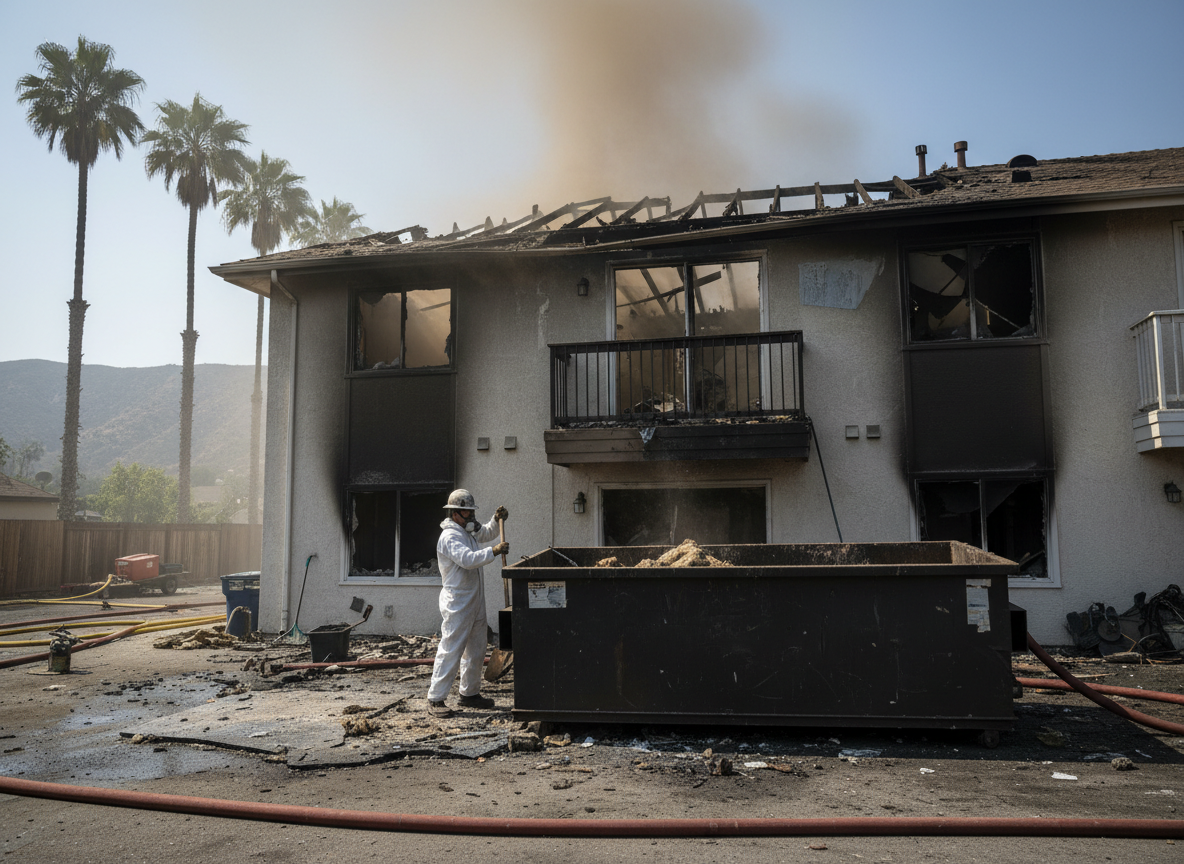
Apartment fires in Woodland Hills often start in kitchens or from electrical faults common in buildings constructed during the 1970s and 1980s boom around Warner Center. Smoke travels quickly through shared HVAC systems and wall cavities into neighboring units, leaving oily residue on surfaces that standard cleaning misses. The area's Mediterranean climate with warm dry summers accelerates soot adhesion to drywall and fabrics, requiring specialized emulsifiers and negative air machines to prevent re-soiling during the cleanup phase.
Work in complexes near Westfield Topanga or Pierce College frequently involves coordinating with multiple tenants and property managers because fire can affect common hallways and parking structures. Older stucco and wood-frame apartments demand careful inspection of insulation and subflooring where smoke odor lingers longest. Technicians must remove affected baseboards and sometimes sections of carpet padding before applying odor-neutralizing agents, as residual smells return once humidity rises during the mild winter months.
Los Angeles County fire codes require documentation of all affected units before re-occupancy, which means crews photograph every room and log materials removed. In buildings close to Canoga Park or Chatsworth, terrain slope can influence how water from suppression efforts drains, sometimes trapping moisture behind cabinets and creating hidden mold risks if drying is incomplete. Thorough containment with plastic sheeting and HEPA filtration protects unaffected apartments during the entire process.
Technician insight
In Woodland Hills, the thing that catches most people out with Apartment fire cleanup is how quickly smoke moves through the older apartment HVAC systems built in the Warner Center era. Dry summer air makes the soot bond tighter to drywall, so if you skip proper emulsification the smell returns the first time winter humidity creeps in from the nearby hills.
Smoke Migration Through Shared HVAC
A kitchen fire in a second-floor unit near Warner Center Park sent heavy smoke into three adjacent apartments via the central air system. Crews found residue inside wall cavities and on insulation that standard wipe-downs had missed. They removed affected drywall sections, ran negative air for 48 hours, and treated the entire stack with hydroxyl generators before clearance testing passed.
How it works
- 1
Initial Assessment
Inspect all affected apartments and common areas to map smoke migration paths through HVAC and shared walls.
- 2
Containment Setup
Install negative air machines and plastic barriers to isolate units and prevent cross-contamination to neighboring apartments.
- 3
Soot and Residue Removal
Clean surfaces with appropriate agents, remove unsalvageable porous materials, and treat odors with ozone or hydroxyl generators.
- 4
Final Clearance
Conduct air quality checks and provide documentation required for Los Angeles County re-occupancy approval.
Pricing
Cost depends on number of units impacted, depth of smoke penetration into cavities, and volume of contents requiring treatment; site visit provides accurate scope.