2026-10-16 ·
Immediate Steps After Smoke Intrusion in San Fernando Valley Homes
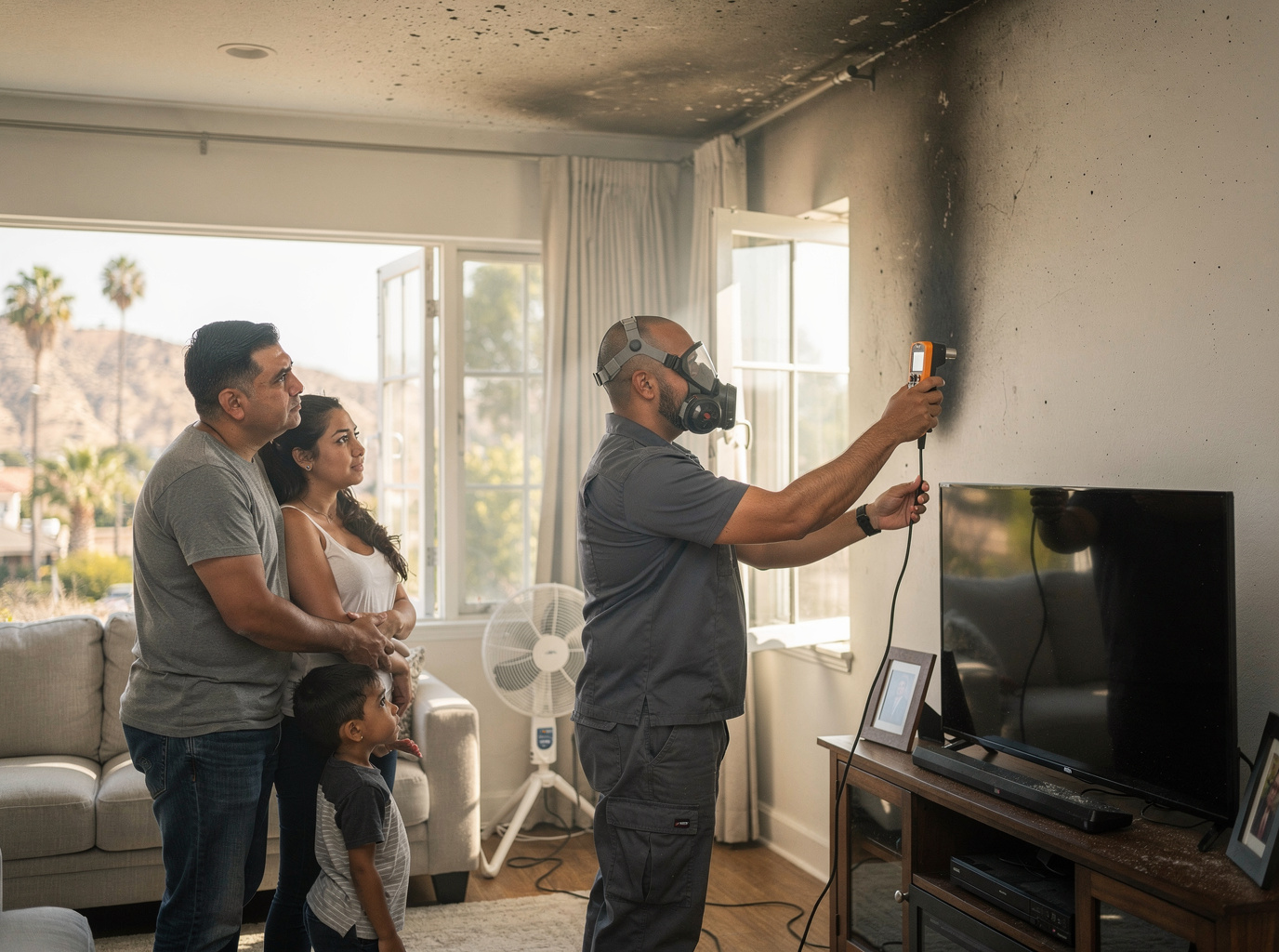
The first immediate steps after smoke intrusion involve evacuating anyone with respiratory issues, shutting off HVAC systems to prevent spread, and contacting a restoration team for on-site assessment within the first few hours. In Woodland Hills homes built from the 1960s through 1990s, smoke travels through shared attics and older ductwork faster than in newer construction, so early containment matters. Mediterranean climate conditions with warm dry summers increase the chance of lingering particles settling into porous materials like drywall and insulation.
Initial Safety and Evacuation Measures
Begin by confirming the structure remains safe to enter and move vulnerable residents to fresh air immediately. Check for active fire sources or structural compromise before opening windows, especially during the dry summer months when Santa Ana winds can push smoke deeper into wall cavities. In neighborhoods near Warner Center Park or Westfield Topanga, residents often face additional challenges from multi-story homes where smoke rises through stairwells and settles on upper floors. Document visible soot on surfaces with photos before any cleaning begins to support insurance claims later. Avoid using household fans that could redistribute particles into unaffected rooms.
Ventilating and Containing the Property
Open windows on opposite sides of affected rooms to create cross-breezes while using box fans to exhaust air outward, but only after confirming outdoor air quality allows it. Seal off unaffected areas with plastic sheeting and painter's tape to limit migration, a step that proves essential in Canoga Park ranch-style homes with open floor plans. During mild winter periods typical to the region, maintain this ventilation for several days to reduce odor concentration before full remediation starts. Professional teams often recommend HEPA air scrubbers placed strategically near entry points from the garage or laundry areas where smoke commonly enters.
Professional Assessment and Soot Removal
Schedule an inspection with technicians experienced in smoke remediation to identify hidden deposits in attics and behind baseboards common in West Hills properties. These experts test pH levels on surfaces because acidic smoke residue from synthetic materials can corrode metal and electronics within 48 hours. In Los Angeles County homes near Pierce College, older electrical systems require extra caution during assessment to avoid compounding damage. Early intervention prevents the need for more extensive work later, particularly when smoke has penetrated kitchen cabinets or bedroom closets.
Odor Management and Long-Term Steps
Address persistent smells by removing affected porous items such as carpeting and drapes before ozone or hydroxyl treatments begin. Properties around Warner Center frequently need targeted odor removal after fire because smoke lingers in textured ceilings and HVAC returns. Follow up with odor removal after fire specialists who understand how local soil and vegetation can influence secondary odor sources. Review building code impacts for any repairs that alter original construction in Woodland Hills.
Residents in Chatsworth and Calabasas facing similar intrusions benefit from the same sequence because regional housing stock shares comparable construction eras and ventilation layouts. Acting within the first 24 hours limits secondary damage from humidity fluctuations even during the area's mild winters. Keep records of every step taken for coordination with adjusters and restoration crews operating from the 6443 Canoga Ave location.