2026-10-16 ·
How Local Building Codes Affect Fire Damage Repairs in Woodland Hills
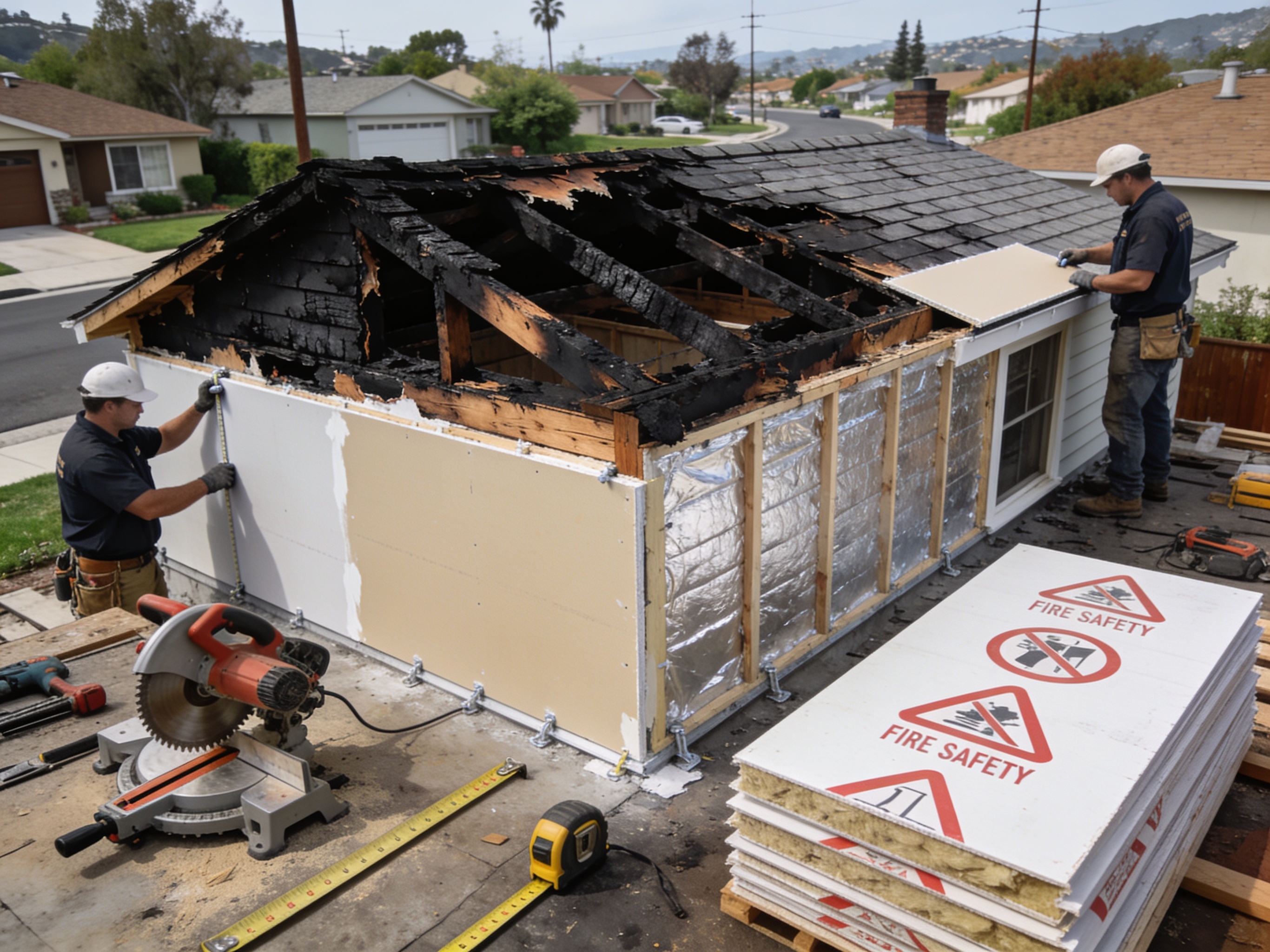
Los Angeles County building codes require fire-rated materials, updated electrical systems, and permits before structural repairs begin in Woodland Hills, typically adding 3–6 weeks to project schedules compared with non-fire jobs. These standards apply across neighborhoods such as Warner Center and West Hills, where many homes built before 1970 feature wood-frame construction that must meet current ignition-resistant requirements during restoration.
Los Angeles County Building Codes and Woodland Hills Housing Stock
Woodland Hills sits within Los Angeles County, where Title 26 of the county code governs fire-damage work on single-family homes and multifamily buildings. Properties near Warner Center Park and Westfield Topanga often date to the 1960s and 1970s, featuring exposed rafters and older wiring that must be replaced with fire-rated assemblies when damage exceeds 50 percent of a wall or roof section. The Mediterranean climate brings dry summers that increase ember intrusion risk, so inspectors now require Class A roofing and ember-resistant vents on any repaired roof slope. Homes in West Hills frequently sit on sloped lots, forcing contractors to address both structural bracing and new fire-blocking requirements at the same time. These rules apply uniformly whether the property is near Pierce College or along Canoga Avenue.
How Codes Change Structural Repair After Fire
Repairs must follow Los Angeles County permit processes that include plan review for fire separation, egress windows, and smoke-detector placement before any framing begins. In Woodland Hills, this often means installing new 5/8-inch Type X drywall on ceilings and party walls even when only partial sections were burned. Structural repair after fire crews must coordinate with county inspectors at three hold points: framing, insulation, and final. Older homes near Chatsworth and Calabasas commonly need additional fire-blocking in attics because original construction lacked modern draft-stopping. The process adds labor for removing and replacing non-compliant sheathing, yet it prevents future violations when properties change hands. Crews working 24/7 from the 6443 Canoga Ave base can stage materials quickly, but permit lead times remain the main schedule driver.
Smoke and Soot Rules Near Warner Center
County health and building departments require documented containment and HEPA filtration during soot removal in Woodland Hills structures. Homes around Warner Center face extra scrutiny because commercial-adjacent zoning triggers stricter air-quality thresholds. Handling ash cleanup on properties around the Warner Center area shows how crews must seal HVAC systems and use negative-air machines until clearance testing passes. Mediterranean winds can carry soot into neighboring units, so boundary properties in West Hills often need shared-wall inspections before occupancy is granted. These steps protect residents but extend the timeline for odor removal after fire and smoke remediation projects.
Practical Compliance Steps for Local Projects
Start by pulling the original permit history from Los Angeles County before any demolition. Document pre-existing conditions with photos to separate code-upgrade costs from insurance-covered fire damage. Schedule the first inspection within 48 hours of board-up to keep the project moving. Properties near Topanga Canyon or Reseda may also fall under additional hillside grading rules if retaining walls were affected. Cost factors for restoring homes near Topanga Canyon after fire outlines how these overlapping requirements affect material budgets. Owners in Canoga Park and Encino benefit from the same county process, which standardizes expectations across the San Fernando Valley.
Closing the Repair Loop Under Local Rules
Final sign-off requires both building and fire-department clearance before utilities are restored. In Woodland Hills this last step often occurs 10–14 days after the last trade finishes. Keeping records of every inspection protects against future disputes when selling the home. The combination of county code, local terrain, and seasonal dryness makes early coordination with inspectors the most reliable way to control both schedule and cost on any fire-damage project in the area.